
There are three main reasons I love Montessori: it makes so much sense, it honors the child and it is really fun! There are designated areas of the Montessori environment that focus on a particular learning area like math, language, science, culture and so on. I would like to take a quick minute and talk about each of these areas in a series of discussions to help explain how Little Lea in specific and Montessori in general work.
Experiential Learning through “Play”

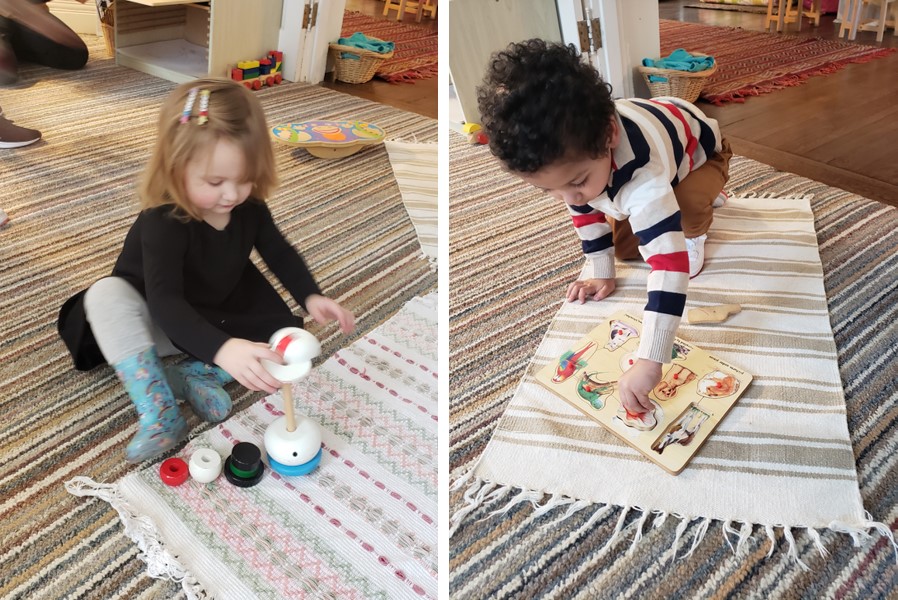
When a child enters the Montessori environment, he is drawn to so many things but usually finds his way first to the PRACTICAL LIFE AREA. This is the place where he gets to do things he sees adults doing all the time as well as a number of other things. He hones his fine motor skills and develops his ability to focus on and stay with one thing. The Practical Life Area fosters a sense of confidence and pride as children learn to pour their own drink, make their own toast, spread their own butter/jam, wash their own dishes, etc. Each lesson is put together to engage the child’s sense of beauty, curiosity and wonder. The lessons are just difficult enough to be within the child’s reach. The child’s first attempts are rarely perfect but as the child goes back and practices that lesson again and again he masters the skill and then will move on to another challenging lesson. The child is choosing the work therefore he is usually quite invested and greatly desires to succeed. The lessons are demonstrated with very few words but always involve a series of steps which the child must follow to achieve the desired results. It is a form of highly organized “play” but we dignify the efforts of the child by naming it his “work.”
Learning from Nuts and Bolts
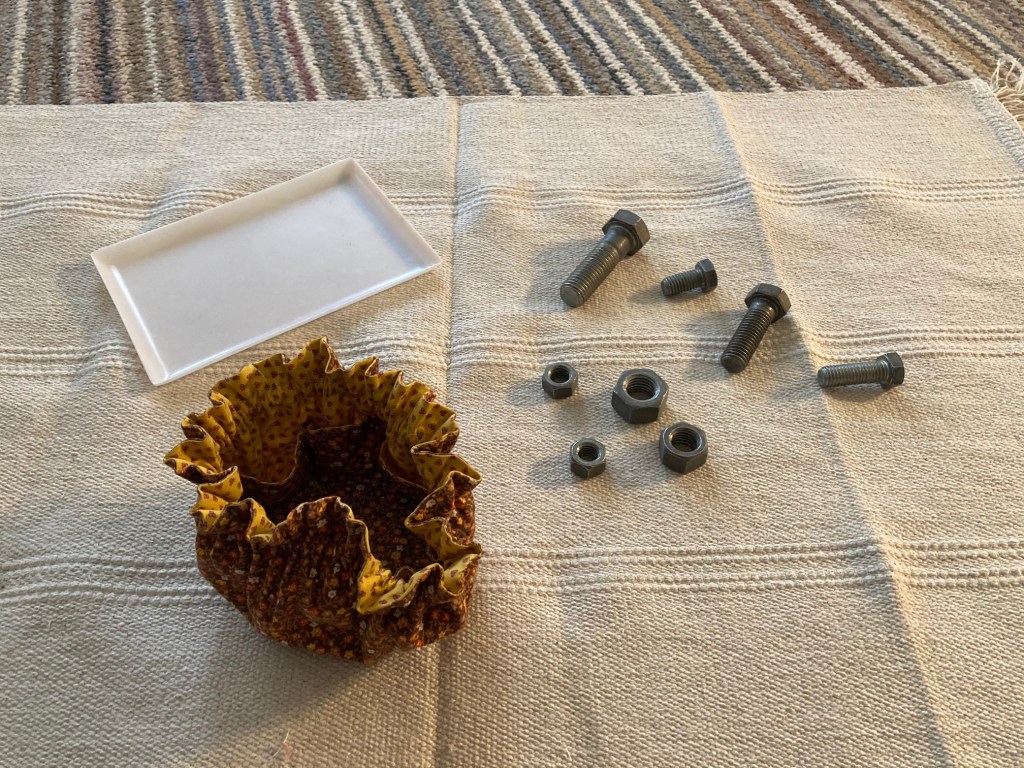
For example, there is this great lesson about nuts and bolts. An interesting draw string bag with interior pockets holds 4 bolts in the center and 4 matching nuts hiding in the pockets. The child opens the bag, discovers the bolts, finds the nuts in the pockets and the proceeds to match and thread the nuts and bolts. Once the child has threaded the matching nuts to their bolts, he dissembles them, replacing all of the pieces where he found them, making the lesson beautiful for the next person. There are many skills involved in this simple lesson: sequencing, matching, threading – but to the child it is simply something they get to “do.”
“Hey, look at what this lady is letting me do!”
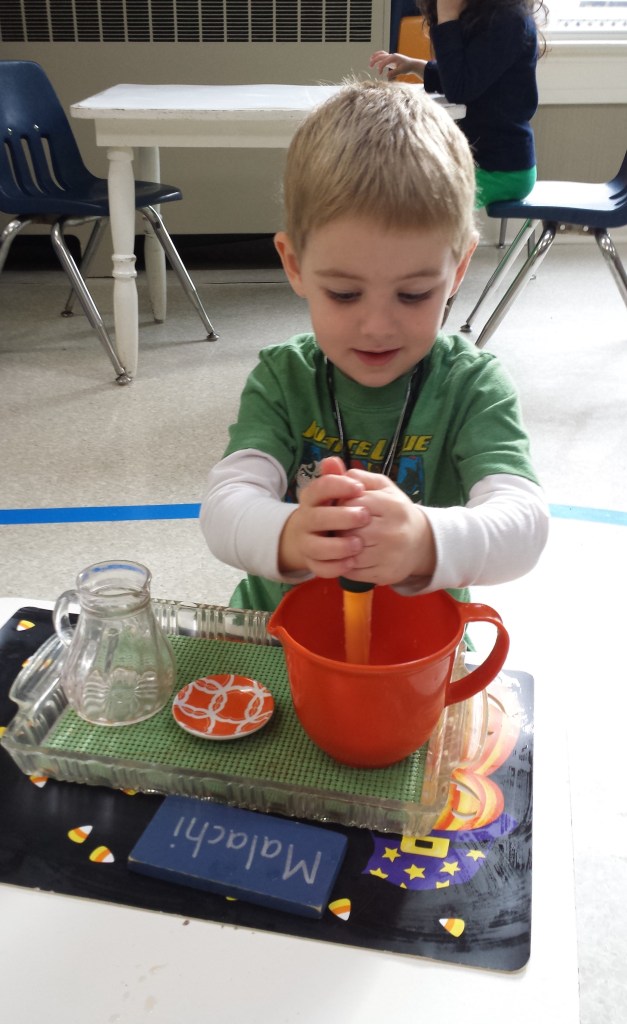
I remember a child visiting our Montessori environment as a guest for the day. He chose a lesson using a baster to transfer water from one bowl to another. As he joyfully entered into the lesson he yelled to his brother on the other side of the room, “Hey, look at what this lady is letting me do!” His statement embodies the beauty of the Montessori environment: a child excited to learn and perform a new skill, pursuing learning with enthusiasm and joy and sharing his excitement with others.
Formation of Character Through Mastery
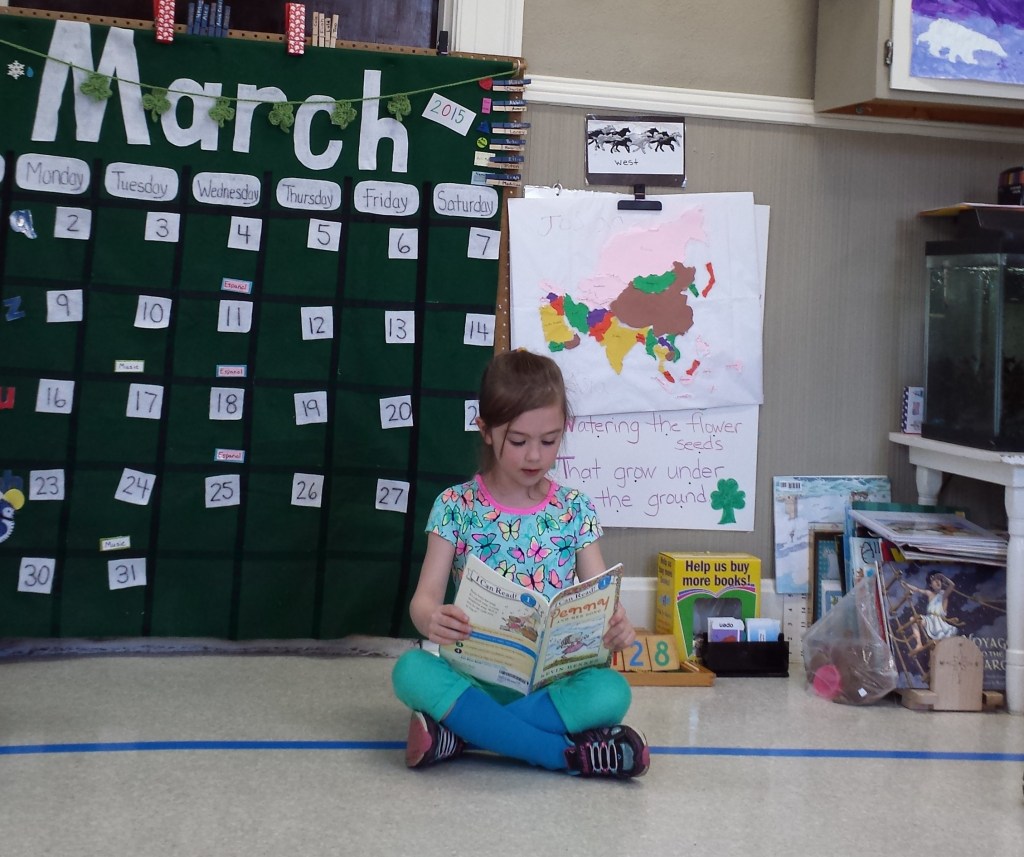
Practical Life activities are incredibly important to the child’s learning and development. Here they gain confidence, refine their fine motor skills and concentration and get to explore so many simple wonderful things adults take for granted. Just a few more examples of the things the Practical Life Area includes: learning how to use: a scoop, tongs, chop sticks, manual coffee grinder, slotted spoon, potato peeler, cheese slicer and more; learning how to thread a needle, sew on a button, perform a running stitch, sew, finger knit, French knit, weave and more; polishing mirrors, wood, silver, brass and copper; sorting like items; finding like items in sensory bags or mystery digs; beginning art. This area is also where the child learns to sweep, mop, clean up spills, roll towels, wash dishes, fold an apron, squeeze a sponge and so on. The lessons are only limited by the adult’s imagination.
Discovering a Love for Learning

One last word about Practical Life. Over the last 8 years of observing 3–6-year-olds in a mixed age learning environment, I have noticed something interesting about Practical Life. Children of all ages will cycle back to Practical Life activities after they have been engaged in more difficult math, language, science or cultural works. It is quite fascinating to observe: a five-year-old finishes a set of math problems concretely adding 4-digit numbers. It is challenging but he does it. When he is finished, he will put that math work away and come back to a Practical Life lesson tonging ping pong balls into small muffin tins or weaving ribbons. I can watch him exhale as he relaxes into this Practical Life activity he has chosen. We know from science that his brain is processing all that he has done in his prior math lesson as he focuses and enters into a concrete Practical Life activity. It is truly amazing to watch children learn and the Practical Life Area is often the gateway to great learning!


 littleleaharrodsburg.com